


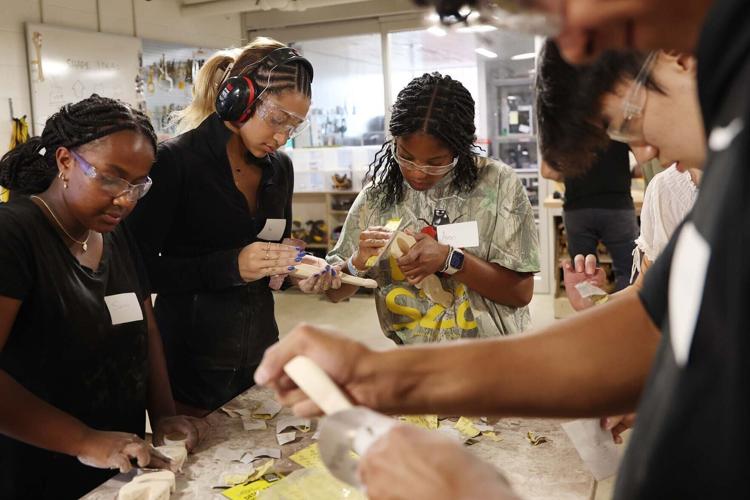
Averi Owens puts the block of carved, cut and pencil-marked wood against the sander, slowly shaving away the surface to release the spoon within the wood.
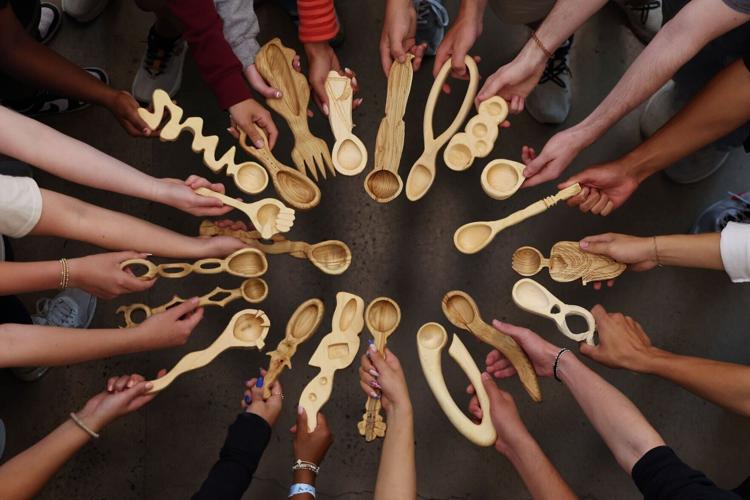
It’s a sleepy spoon.
“I got the word ‘sleepy,’ and I kind of thought of the spoon like a body,” she said before donning safety gear and heading into the Fabrication Lab at the University of Virginia’s School of Architecture. “I made the bowl like the head, and the shape like someone sleeping. I’m going to put a thumbhole here so it will be comfortable to hold.”
Owens, a high school junior from Aldie, is among 40 high school students attending the Design Discovery Youth Summer Program at the Architecture School. The program is divided into two six-day sessions, each with 20 students. It includes design-and-build workshops featuring spoons and inflatable sculpture, tours of active construction sites and lunch-and-learn sessions with professionals.
People are also reading…
The first session was held this week, and the second is slated for June 22-27. UVA architecture students and staff, alumni and professors design and lead the workshops.
The program’s main goal is to demystify design. So why design a spoon?
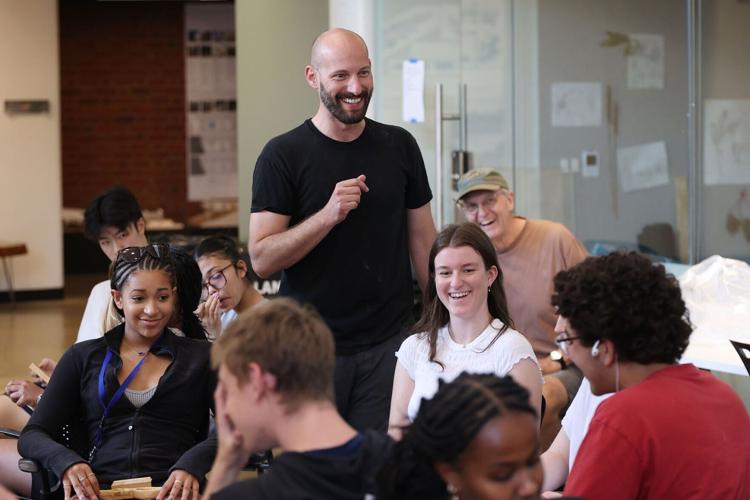
“It’s a wonderful opportunity to take a known object and embed it with a character and attitude,” said Kyle Sturgeon, associate dean of strategic initiatives for the Architecture School and the director of the summer program.
“In architecture, we bring our own creative voice, but you’re also given a site to steward and a prompt to inform the design of a structure. Here, you’re given a bowl geometry and an attitude to design and make a spoon.”
The block of wood is the site, but no site is exactly the same. Different-shaped spoon bowls are carved into each piece: some are wide but shallow, while others are small but deep. The prompt is a word.
The spoon’s design is all in the student.
“My prompt is ‘shy,’ and I feel like shy is kind of small, so my spoon is going to be pretty small and kind of narrow,” said Ava Ahaghotu, a high school junior from Bethesda, Maryland. “I thought, if you’re shy, you might not have hard edges, so I’m designing it curvy and kind of delicate.”
Design, for Sturgeon, is a superpower.
“I think it’s hugely important in our future. I also think it’s important who wields that power and who gains access and exposure to it,” he said. “For students, it’s often a matter of exposing them to the ideas. It’s like there’s something within them for them to discover about themselves, something that will ignite them.”
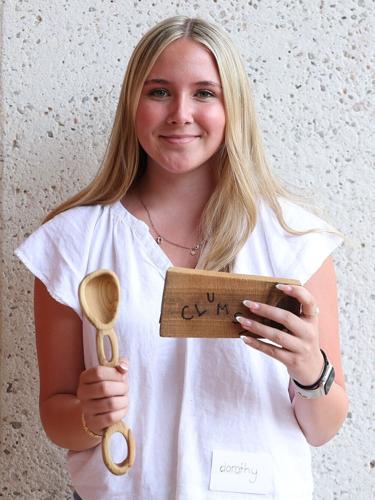
The word “clumsy” ignited a whole range of thoughts for Dorothy Streit, from Crozet, who had several sketches for her spoon.
“My first idea was making it curvy and all over the place, but then I translated the curves into something that became more structured – which is fine, but it’s not as clumsy, I guess,” she said. “I like coming up with an idea and creating a physical version of it. I do ceramics and stuff, and I’ve always enjoyed the whole design process. I’ve been looking at colleges – UVA has always been one of my top choices – and I found this program.”
The program introduces students to the ideas, skills and language of architecture. Half of the participants are from out of state, many are local, and they come from a variety of ethnic and economic backgrounds.
For some, the program is part of the path they choose.
“I’m between civil engineering and architecture, so this is definitely going to be one of the factors that play into my final decision. I’m also coming back here for an engineering program,” said Julian Zelaya, from Montgomery County, Maryland. “It gives me a very well-rounded idea of what to expect from architecture in general, and also at UVA specifically.”


