



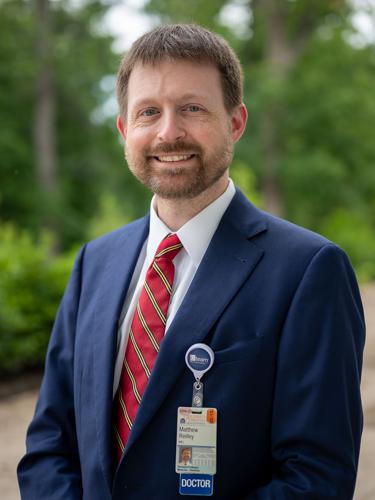

Reilley answered UVA Today’s questions about Daraxonrasib, which is awaiting expedited approval from the U.S. Food and Drug Administration and could be available within months.
Why is this new pill being described as a breakthrough for pancreatic cancer?
A. Despite it being one of the more common cancers, pancreatic cancer is absolutely one of the deadliest cancers, because we tend to catch it late in presentation. We haven’t had much in the way of improvements in our treatments for this disease.
About 90% of pancreatic cancers have an activating mutation in the KRAS gene. It’s historically been thought that we could never target that with a drug. The drug that Revolution Medicine has developed is really the first drug that has a selective ability to bind to primarily mutated versions of this gene and turn it off.
People are also reading…
What do the clinical trial results tell us about survival?
A. In the patients entering a second line of treatment of those who got just chemotherapy, the average overall survival was 6½ months. In patients who got the new drug, the survival improved to 13.2 months, so it was more than a doubling of survival.
What side effects have researchers seen so far, and how do they compare with standard chemotherapy?
A. The biggest side effect that’s been on the news is the rash. Former U.S. Sen. Ben Sasse was part of the trial and has one on his face. The rash is bothersome and requires prompt management. It’s certainly not easy, but in many ways, it is easier than chemotherapy because it’s a pill rather than being something that you have to get through the vein every week or two weeks.
What opportunities do patients have to participate in clinical trials involving new therapies at UVA?
A. We have several clinical trials that are targeting the same pathway in pancreatic cancer patients with similar drugs. We have developed an internal trial that I’m leading. It should be opening in the next couple of months, and it’s going to be open to patients who have a new diagnosis of pancreatic cancer. If they are interested, they can reach out to the clinical trials office or the Cancer Center in general, and we’ll work to evaluate whether we can help. Anybody can reach out.
How might this drug change the treatment landscape over the next several years?
A. The phrase I would use is that this is “the tip of the iceberg.” I think in the next couple of years we’re going to see a transformation of the landscape from being “we just hit pancreatic cancer with chemotherapy and hope for the best,” to being really a targeted disease where we use molecular genomics and the gene signature to be able to more precisely give patients therapies tailored to their tumors.


