


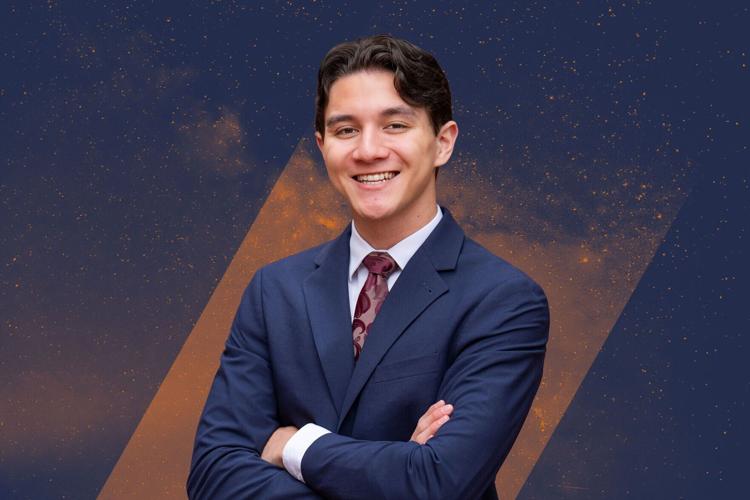

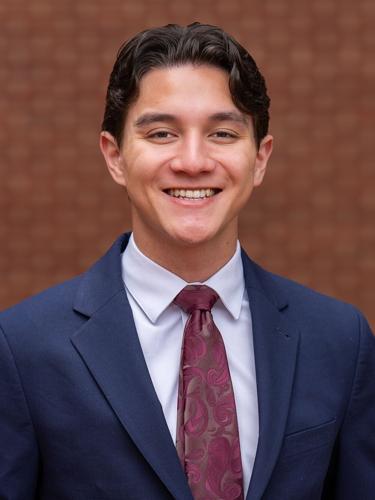
The Astronaut Scholarship Foundation has added University of Virginia rising fourth-year student Micaiah Lee to its fold.
Scholars receive up to $15,000 in tuition support, plus exclusive mentorship and professional networking with astronauts, scholarship alumni and industry leaders. Six Mercury 7 astronauts founded the Astronaut Scholarship Foundation in 1984 to encourage the best STEM scholars in the United States. Each year, UVA nominates third-year students through a process facilitated by the Office of Citizen Scholar Development.
“I am proud to know Micaiah,” Andrus G. Ashoo, who directs the Office of Citizen Scholar Development, said. “He embodies our core virtues of honesty, humility, curiosity and courage in his life and research. Micaiah’s positive disposition and joy are infectious even amid rejection from other opportunities. It is a joy to work with a student for whom feedback is truly a gift and shortcomings are an opportunity to learn and grow.”
People are also reading…
Lee, a biomedical engineering student, researches cancer treatments.
“When I was 6, I decided that I wanted to be a bioengineer or go into genomics,” he said. “When I was in high school, a pair of graduate students in my parents’ Bible study approached me about helping with a project studying cancer invasion in the brain.”
Cancer intruded into Lee’s consciousness at an early age when his paternal grandmother succumbed to the disease.
“Throughout my childhood, my family prayed together every night and found ourselves constantly praying for friends and coworkers battling cancer,” he said. “There truly were an overwhelming number of people we knew who were fighting the disease, and it rooted cancer in my mind as a looming shadow, which I now have the opportunity to help fight.”
Lee is an undergraduate researcher in the laboratory of biomedical engineering assistant professor Natasha Sheybani, who is also the research director of the UVA Focused Ultrasound Immuno-Oncology Center. There, researchers are developing new ways to use ultrasound and advanced imaging to help the immune system find and fight cancer.
Lee has studied how focused ultrasound can help deliver drugs to the brain and improve cancer treatments. His current research explores how ultrasound can enhance immunotherapy and improve the delivery of treatments to brain tumors.
He is not taking the summer off. “I am headed to the University of California at Berkeley as an Amgen Scholar for the summer, during which I will work in assistant professor Derfogail Delcassian’s lab on T cells, a broad subset of immune cells which are important for fighting viral infections and cancer,” Lee said.
Berkeley is not Lee’s only destination this year. He will also travel to Houston in August for the Astronaut Scholarship Foundation’s Innovators Symposium and Gala. Lee is one of 79 Astronaut Scholars recognized this year.
“The financial resources and especially the networking opportunities which come with being an Astronaut Scholar are going to be a tremendous asset over the academic year and beyond as I apply to doctoral programs in bio/biomedical engineering,” Lee said. “Professional relationships and teamwork are key in the complex world of biomedical engineering, and the financial benefits will ensure I can spend my time focused on research and coursework.”


